
Understanding the History and Process
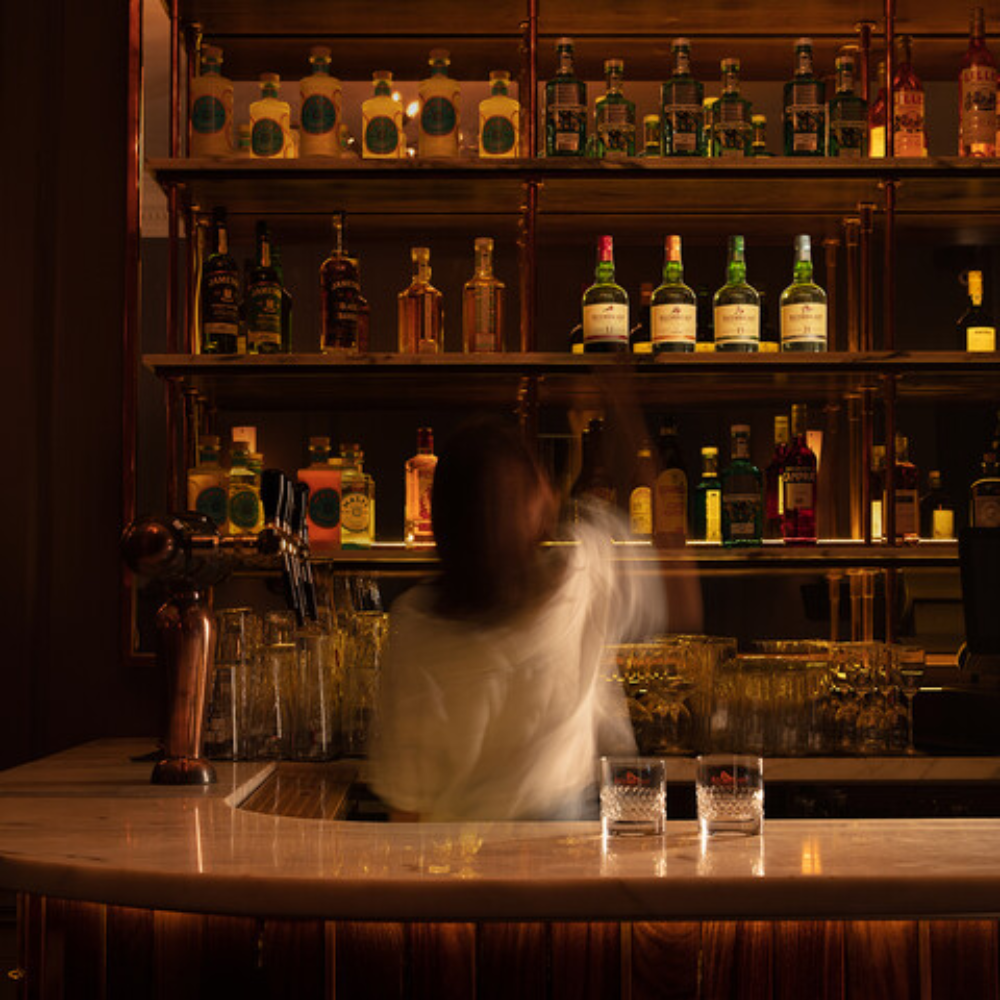
If you spend enough time around whiskey and pubs, sooner or later someone will ask the question: what actually makes Irish whiskey Irish?
It’s a fair question. After all, whiskey is made all over the world, from Scotland and the United States to Japan and beyond. Yet, Irish whiskey carries a character all its own: smooth, balanced, and quietly complex, it has a style that’s been shaped by centuries of tradition, craft, and a certain Irish way of doing things.
The truth is, Irish whiskey isn’t defined by just one rule. It’s the result of a few essential ingredients coming together: where it’s made, how it’s distilled, the grains used, and the years it spends maturing patiently in oak casks.
And if you ask those of us who work with it every day, there’s another ingredient as well — a sense of heritage and culture that runs just as deep as the whiskey itself.
So let’s take a look at what makes Irish whiskey truly Irish.
The Short Answer: What Defines Irish Whiskey?
At its simplest, Irish whiskey is defined by a few clear principles.
To legally be called Irish whiskey, the spirit must:
- Be brewed, fermented, distilled and matured on the island of Ireland
- Be distilled from a mash of cereal grains
- Be aged for at least three years in wooden casks
Those rules form the legal foundation of the style. But anyone who has spent time in a distillery knows the real story runs a little deeper than that.
Irish whiskey is shaped not only by law, but by a long-standing tradition of distilling — one that includes triple distillation, patient maturation, and distinctive styles like single pot still whiskey, a style proudly preserved here in Ireland.
Did the Irish Invent Whiskey?
Now and again someone will ask whether the Irish invented whiskey altogether. Like many good stories, the answer depends on who you ask.
The word “whiskey” itself comes from the Irish phrase “uisce beatha,” meaning water of life. Irish monks were distilling spirits as far back as the early medieval period, adapting techniques they had encountered across Europe.
Over time, those early experiments evolved into a thriving distilling tradition. By the 19th century, Irish whiskey had become one of the most popular spirits in the world, exported from bustling distilleries across Dublin, Cork, and beyond.
So while the exact origins of whiskey may be debated across a few friendly borders, there’s no doubt that Ireland played a central role in shaping the spirit as we know it today.
And many of the techniques that define Irish whiskey — particularly its distinctive distillation style — remain at the heart of the category.
How Irish Whiskey Is Made
Now and again someone will ask whether the Irish invented whiskey altogether. Like many good stories, the answer depends on who you ask.
Like all great spirits, Irish whiskey begins with grain, water, and time. But the way these elements come together is what gives the whiskey its distinctive character.
1. The Mash: Malted and Unmalted Barley
One of the most distinctive Irish traditions lies in the mash bill used to produce single pot still whiskey.
Instead of relying solely on malted barley, Irish pot still distillers historically used a mixture of malted and unmalted barley. This created a spirit with a uniquely silky texture and a gentle spice — a style that became a hallmark of Irish whiskey.
Here, you can already see the difference between Irish whiskey and bourbon, as bourbon must legally be made from a mash bill containing at least 51% corn. Scotch, on the other hand, is typically made using only malted barley when produced in pot stills.
2. Triple Distillation in Copper Pot Stills
Irish whiskey is also well known for its triple distillation.
While some other types of whiskey are distilled once or twice, Irish distillers typically run the spirit through copper pot stills three times.
The result is a spirit that is exceptionally refined, smooth, and elegant, qualities often associated with Irish whiskey around the world.
3. Maturation in Wooden Casks for 3+ Years
Once distilled, the spirit enters wooden casks for maturation.
Irish whiskey must be aged for a minimum of three years, though in practice, it is often matured much longer. During this time, the whiskey slowly draws flavour from the wood, developing colour, aroma, and complexity. While not required by law, Irish whiskey is also almost always aged in oak casks.
Unlike bourbon, which must be aged in brand-new charred oak barrels, Irish whiskey is typically matured in seasoned casks (often ex-bourbon barrels or sherry casks that have already held other spirits or wines).
At Midleton Distillery, where Redbreast is produced, we mature our whiskey in a combination of ex-bourbon barrels and sherry casks. The bourbon casks lend gentle vanilla and toasted oak, while the sherry casks bring layers of dried fruit, spice, and richness.
4. Blending and Marrying the Casks
Once whiskey has matured in oak casks, the final character often comes together through the careful craft of whiskey blending or marrying casks.
In the case of single pot still Irish whiskey, this does not mean blending different styles of whiskey. Instead, it involves selecting and combining multiple casks of the same pot still spirit that have matured in different ways over time.
Each cask develops its own personality depending on factors like the type of wood, previous contents, and the years spent resting in the warehouse. By tasting and selecting these casks, the blender brings them together to achieve the right balance and depth of flavour.
For Redbreast, this typically means marrying single pot still whiskeys matured in both bourbon barrels and sherry casks, creating the rich fruit, spice, and toasted oak that define the style.
How Long Is Irish Whiskey Aged?
Legally speaking, Irish whiskey must mature in wooden casks for at least three years before it can be called whiskey at all.
But in truth, three years is only the beginning.
Whiskey evolves gradually as it rests in oak. Over time the spirit softens, absorbs flavour from the cask, and develops greater complexity. That’s why many Irish whiskeys are matured for considerably longer.
In the Redbreast family, for example, our expressions range from the well-loved Redbreast 12 Year Old to older and deeper releases like Redbreast 21 Year Old and even Redbreast 27 Year Old.
The lesson: good whiskey rarely rushes anything, and patience tends to reward you in this business.
Why Single Pot Still Whiskey Is Ireland’s Signature Style
If there’s one style that truly captures the spirit of Irish whiskey, it’s single pot still whiskey.
Originally created in Ireland, the Irish pot still tradition dates back hundreds of years. By combining malted and unmalted barley and distilling the mash in copper pot stills, distillers created a whiskey with a character unlike anything else in the world.
Single pot still whiskey is often recognised for:
- Its rich, silky mouthfeel
- Gentle spice from unmalted barley
- Layers of fruit, toasted wood, and warmth
For many whiskey enthusiasts, single pot still whiskey represents the heart of Irish distilling tradition and Redbreast’s heritage
Every expression in the Redbreast family is crafted from single pot still whiskey distilled and matured at Midleton Distillery in County Cork, carrying forward a style that has become one of Ireland’s most treasured contributions to the world of whiskey.
Three Cultural Rules Around Irish Whiskey
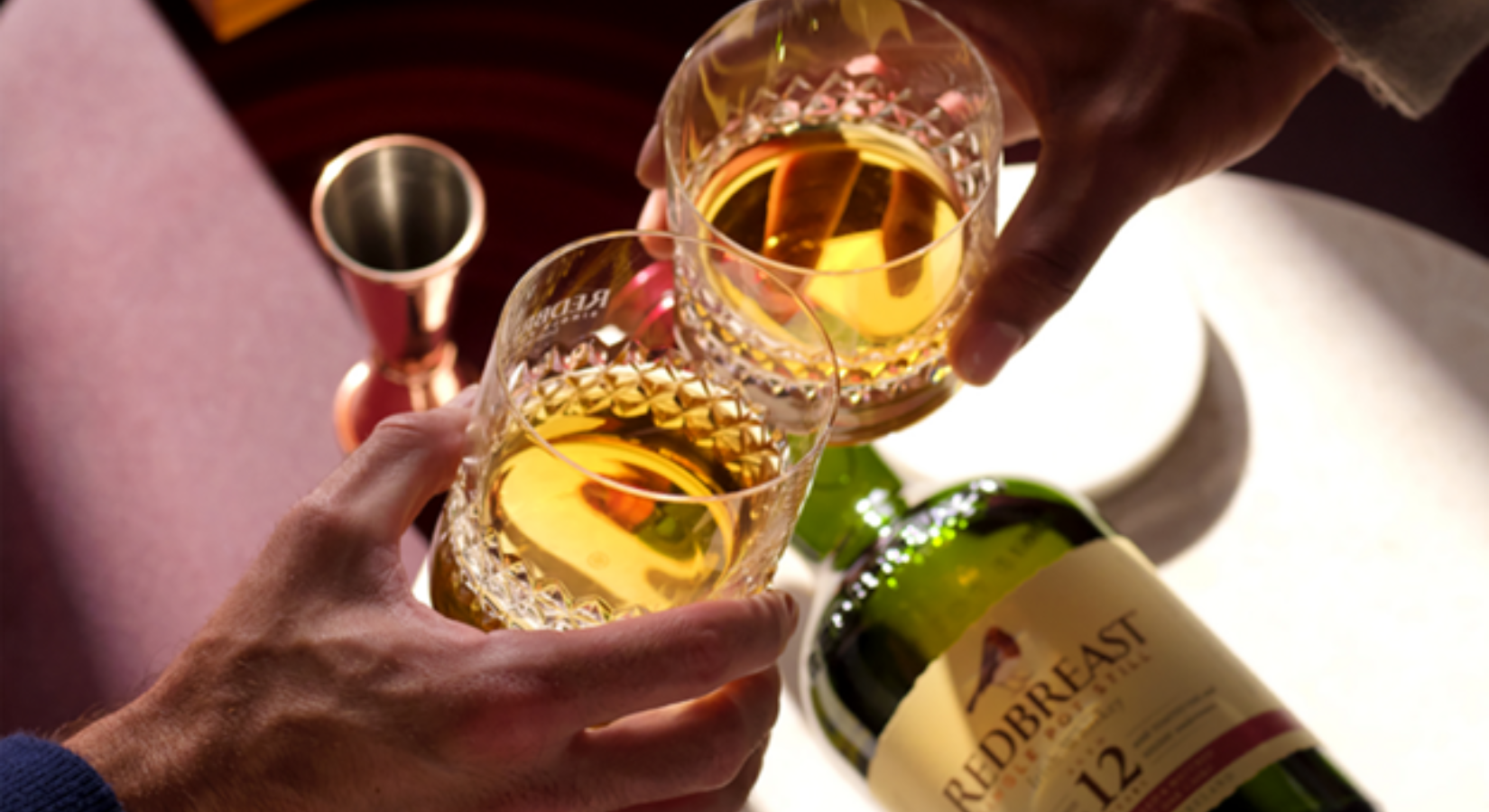
Irish whiskey may be defined by laws and distillation methods, but its culture has always been shaped by something less formal — the quiet customs that surround a good glass.
You won’t find these written in any distillery handbook, but spend enough time around Irish whiskey and they reveal themselves soon enough.
1. Whiskey Should Never Be Rushed
There’s an old truth in distilling: good whiskey is made slowly. Likewise, it’s best enjoyed slowly.
Long before it reaches the glass, Irish whiskey must rest patiently in oak casks for years. By law, it must mature for at least three years. But in practice, many of the most characterful whiskeys spend far longer in the warehouse, quietly developing flavour one season at a time.
That patience has naturally seeped into the Irish whiskey drinking culture.
As our former Master Blender Billy Leighton puts it when asked about what makes good whiskey:
“Aside from the obvious, the best quality distillate and best quality casks, there is no substitute for the passion of the generations of people involved in the production.”
Once it finally finds its way into the glass, the same respect for the art of patience that created it tends to apply. Even with an Irish coffee, whiskey isn’t the sort of drink designed for rushing. It’s more at home in the middle of a long conversation, where a good sip can be appreciated and the evening allowed to unfold at its own pace.
2. Irish Whiskey Is Best Paired with a Good Story
Ireland has always had a deep affinity for storytelling — a custom that has long been interwoven with Irish whiskey culture.
Long before radio or television, villages relied on seanchaí — traditional storytellers who carried local history, folklore, and poetry from one generation to the next. These tales were shared in homes, at gatherings, and quite often in the warmth of a local pub. Naturally enough, a glass of whiskey was rarely far from the table.
Over time, the Irish pub became something of a modern home for that tradition. The setting may have changed, but the rhythm remains familiar: a good story begins, someone interrupts with a correction, another person insists they remember it differently, and the conversation gathers momentum with every round.
Irish writer Brendan Behan once joked that “the first drink is for thirst, the second for nourishment, and the third for good company.” It’s a sentiment that feels rather close to the heart of Irish whiskey culture.
Spend enough evenings around a bottle and you’ll see how naturally it all comes together. A sip of whiskey, a story shared, and the quiet understanding that the night has only just begun.
3. A Guest Should Never Leave Without a Glass
If there is one rule that truly underlines Irish whiskey culture, it might be this: a guest should never leave a house without being offered something to drink.
Irish hospitality has deep roots stretching back through folklore and tradition. Welcoming a visitor with food or drink was long considered a mark of generosity and respect — and a glass of pot still Irish whiskey naturally became part of that welcome (sometimes next to whiskey food pairings if you’re extra generous).
Even those who didn’t drink themselves were often known to keep a bottle tucked away in the cupboard for visitors, simply because it would have felt impolite not to offer it.
It’s a small gesture, but a meaningful one. Because in Ireland, whiskey has never been just about flavour or craft, but the people you share it with.
Why Redbreast is the Epitome of Irish Whiskey
For us at Redbreast, Irish whiskey has always been about preserving a tradition while allowing it to continue evolving.
Our single pot still whiskey is distilled in copper pot stills at Midleton Distillery and matured in a careful balance of bourbon and sherry casks. This approach gives Redbreast whiskey its signature character: rich fruit, warming spice, and that unmistakable pot still texture.
This signature flavour of Irish whiskey is carried across the Redbreast family, from the classic richness of Redbreast 12 Year Old to the deeper, more mature complexity found in 21 year old whiskey expressions.
We’ve always believed that great whiskey is built on patience, craft, and a deep respect for the traditions that came before us. And if you ask us, that’s exactly what makes Irish whiskey Irish.